
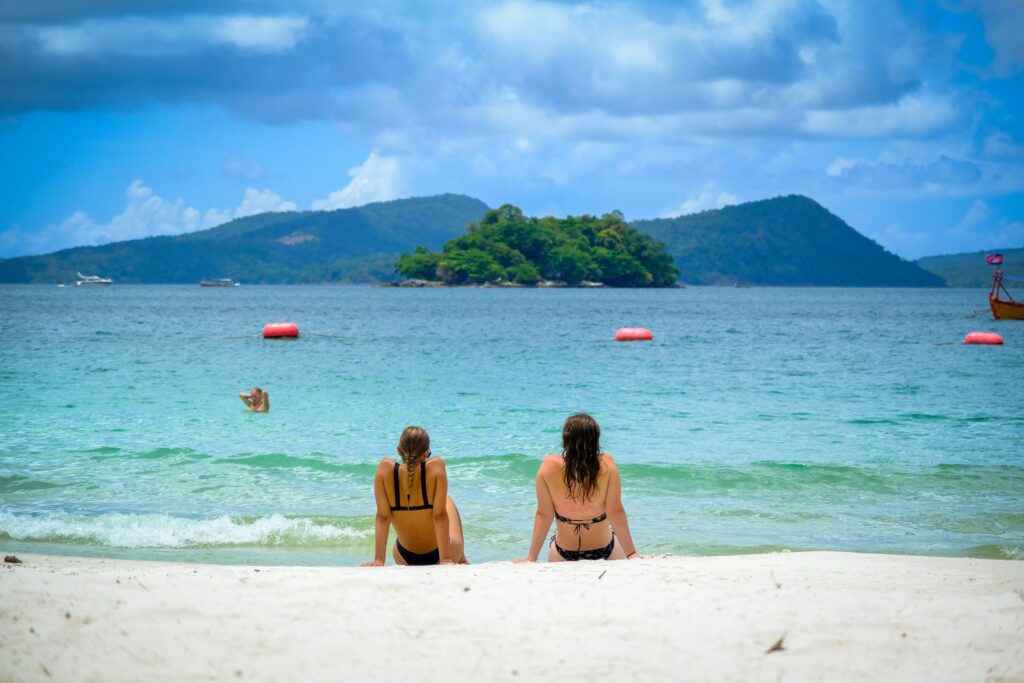
There’s a moment every visitor to Patong remembers. You step off the road, past the vendors and the scooters, and the beach opens up in front of you: nearly three kilometers of pale gold sand curving against water so warm and so blue it looks retouched. Longtail boats rock gently at anchor. Somewhere behind you, a street vendor is grilling skewers, and the smell drifts out over the sand. This is Patong — and it’s not an exaggeration to say no other beach in Thailand packs this much life, energy, and pure sensory pleasure into one stretch of coastline.
If you’re planning a trip to Phuket and wondering whether Patong deserves your time, here’s the honest answer: it’s not just worth it, it’s the place that defines what a Phuket holiday feels like. This guide will walk you through exactly why, and how to make the most of it.
Why Patong Beach Deserves the Top Spot on Your Itinerary
Patong isn’t trying to be a quiet, undiscovered hideaway, and that’s precisely its appeal. It is Phuket’s most complete destination — the one place on the island where a world-class beach, a legendary nightlife district, an enormous range of restaurants, and easy access to everything else in Phuket all exist within a ten-minute walk of each other.
Most beaches ask you to choose: relax here, or go find your fun elsewhere. Patong refuses that trade-off. You can spend your morning floating in the Andaman Sea, your afternoon getting a beachfront massage or riding a jet ski, your evening trying five different cuisines within a few blocks, and your night dancing until sunrise — all without ever needing a taxi. For first-time visitors to Phuket especially, that convenience is difficult to overstate.
The Beach Itself: More Than Just Sand
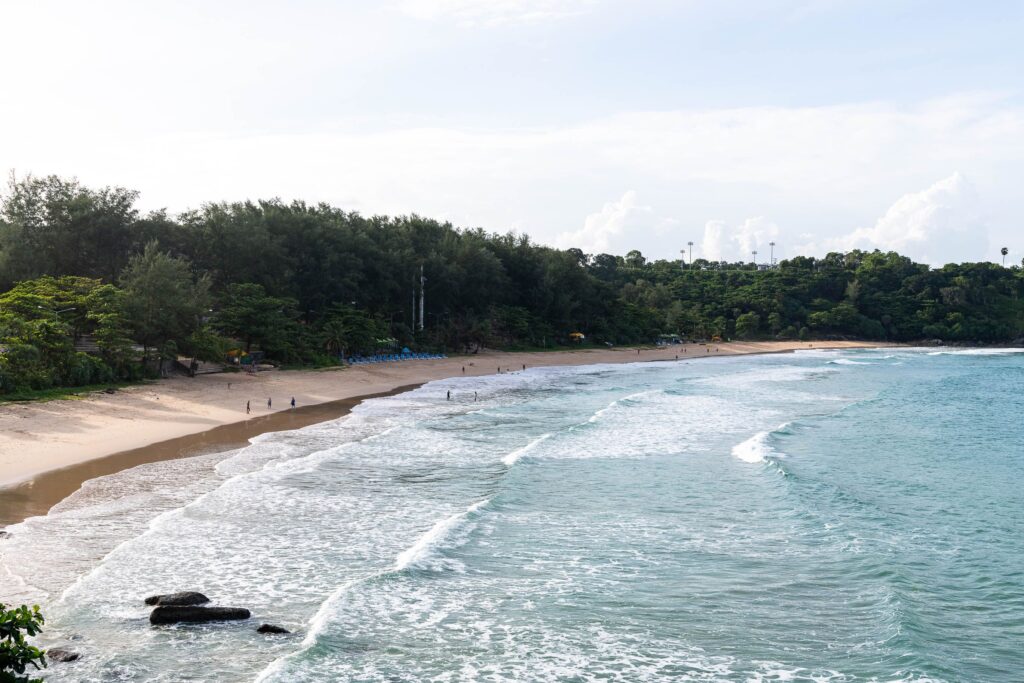
Patong Beach stretches roughly three kilometers along Phuket’s west coast, and the shape of it matters — the gentle crescent means that no matter where you set up for the day, you get a clear, uninterrupted view of the horizon. The sand is soft and pale gold, sloping gradually into the water, which makes it comfortable underfoot even at midday.
The water itself changes personality with the seasons, and that’s worth understanding before you go (more on that below). During the dry months, the sea is calm, clear, and warm enough that you’ll want to stay in far longer than planned. Beach chairs and umbrellas line most of the shore, rented cheaply from the same operators who’ll fetch you a fresh coconut or a cold Chang beer without you ever having to get up.
For travelers who want more than sunbathing, Patong delivers there too. Jet skiing and parasailing operators work the northern and southern ends of the beach, offering quick adrenaline bursts over the bay. Snorkeling trips depart for the nearby islands, and scuba operators run both introductory dives and full certification courses out of Patong for divers wanting to explore Phuket’s famous reefs. If you’d rather stay dry, a sunset walk along the full length of the beach — as the sky turns orange over the Andaman Sea — is one of those simple, free experiences that ends up being everyone’s favorite photo from the trip.
Bangla Road: Thailand’s Most Famous Night Out
No honest guide to Patong can avoid talking about Bangla Road, because it’s genuinely one of the reasons the destination exists in its current form. This 400-meter pedestrian street, just a short walk from the beach, transforms every evening into one of Southeast Asia’s most electric entertainment districts.
Here’s how it actually works. Around 6 PM, the street closes to traffic and the transformation begins — neon signs flicker on, staff set up tables, and the first wave of live bands starts warming up. Bars open from around 6 or 7 PM, technically closing at 2 AM, though the bigger nightclubs — Illuzion and Sugar among the best known — keep the music running until 4 or 5 AM. The real energy peaks between 10 PM and 1 AM, when the street performers are out in force, the clubs are at full volume, and Bangla Road is shoulder-to-shoulder with visitors from every corner of the world.
What makes it work is the range. You’ll find open-air sports bars with cheap beer and football on every screen, rooftop lounges for a quieter drink with a view, live-music venues with genuinely talented cover bands, and high-energy dance clubs that don’t slow down until sunrise. Entry to most bars is free; the larger clubs typically charge a 300–500 baht cover that usually includes your first drink. It’s loud, it’s unapologetic, and it’s an experience every visitor should see at least once, even if a big night out isn’t normally your style.
A practical note: keep your belongings close in the crowds, agree on drink prices before you order, and politely wave off the touts — Bangla Road is well-patrolled and generally safe, but like any dense nightlife strip anywhere in the world, it rewards a little street sense.
A Food Scene That Rivals Any Beach Town in Asia
Patong’s dining scene has quietly become one of its strongest assets, and it’s easy to miss if you’re only there for the beach and the nightlife. Within a few square kilometers, you’ll find proper Thai seafood shacks grilling the day’s catch over charcoal, hole-in-the-wall noodle stalls, and street carts serving mango sticky rice and pad thai for less than the cost of a coffee back home. Layer on top of that a surprisingly deep bench of international restaurants — Italian trattorias, Japanese izakayas, Indian curry houses, Middle Eastern grills, and European bistros — and you have a food scene that can satisfy a group of travelers with completely different tastes, every single night of a longer stay.
The move most seasoned visitors make: eat street food and seafood shacks for lunch, and save one or two nights for a proper sit-down dinner at a beachfront restaurant, timed to catch the sunset over the water.
Shopping and Downtime
When you need a break from sun and sand, Jungceylon — Patong’s largest shopping mall — offers air-conditioned relief along with fashion, beauty, electronics, and a solid food court. For something more local, Malin Plaza and the surrounding market lanes are where you’ll find souvenirs, beachwear, and everyday essentials at prices worth haggling over. And just a few minutes from the chaos of the main strip, Wat Suwan Khiri Wong (Wat Patong) offers a genuinely peaceful, golden-roofed temple visit — a nice reminder that Patong still has a quieter, older Thailand underneath the neon.
Patong also makes an excellent base for day trips. Speedboat tours to Phi Phi Islands, Maya Bay, and the stunning Pileh Lagoon typically depart right from the Patong/Phuket area, often bundling snorkeling, lunch, and hotel transfers into one easy booking — meaning you can headquarter yourself in Patong for your whole trip and still see the rest of the region’s best-known sights.
When to Go: Timing Your Trip Right
This is the part every good guide should be honest about, because it genuinely changes your experience.
Phuket’s dry season runs from November through April, with December to March offering the most reliable sunshine, calm seas, and comfortable temperatures in the mid-to-high 20s Celsius (mid-70s to high-80s Fahrenheit). This is peak season for a reason — the water is at its clearest and calmest, and conditions are ideal for swimming, snorkeling, and every water activity mentioned above. Unsurprisingly, January and February are Patong’s busiest months, so book accommodation early if you’re aiming for that window.
The monsoon season runs roughly June through October, with September and October typically the wettest. This doesn’t mean Patong shuts down — far from it, the town, the food, and the nightlife run year-round — but the west-coast surf picks up considerably, rip currents become more common, and you’ll see red flags posted more frequently, sometimes for the whole day. If you’re visiting during these months, treat the flag system as non-negotiable: green means it’s safe to swim, yellow means caution, and red means stay out of the water, no matter how inviting it looks. Patong’s currents are among the strongest of any beach on the island during this period, so this is one instance where local advice is worth following exactly.
One more honest note worth knowing before you go: toxic jellyfish, including the Portuguese man-of-war, have occasionally been reported along Phuket’s west coast, mostly during the cooler months. It’s rare, and lifeguards post warnings when sightings occur, but it’s worth a quick glance at the flags and any posted signage before you wade in.
None of this should discourage a visit — it simply means dry season is your best bet for guaranteed beach weather, while the shoulder months (May and November) can offer a nice middle ground: fewer crowds, lower prices, and generally manageable weather.
Getting to Patong
Patong sits about 36 kilometers from Phuket International Airport, and the journey takes roughly 45 to 60 minutes depending on traffic. A metered taxi is the simplest option, running approximately 600–700 baht plus a 100 baht airport surcharge — just make sure the driver starts the meter before pulling away. Grab, the regional ride-hailing app, has an official pickup point at the airport and is a reliable, transparent alternative. Budget travelers can take the Phuket Smart Bus, a flat 100 baht per person to any west-coast beach, though it takes closer to 60–90 minutes. However you arrive, once you’re in Patong itself, everything worth reaching is walkable.
Final Word
Patong Beach isn’t a secret, and it isn’t trying to be one. It’s Phuket at full volume — brighter lights, better food, bigger nights, and a beach genuinely worth the hype in between. Whether you’re chasing a sunset, a seafood dinner, a dive trip, or a night on Bangla Road you’ll be telling stories about for years, Patong is built to deliver all of it, often in the same 24 hours.
Pack sunscreen, check the flags, and go see it for yourself.
Planning your Phuket trip? Explore more insider guides on PhuketInside.com to make the most of your stay.
Research Patong Beach factsDraft SEO blog postSave as markdown and deliverVerify facts and polishpatong-beach-guide.mdConnectorsWeb Search
Leave a Reply