
Firecrackers are the first surprise: periodic bursts crackling from a brick kiln in the courtyard, lit by worshippers whose prayers were answered — a Wat Chalong signature that startles every first-timer and explains the temple’s standing better than any plaque. This is Phuket’s largest, busiest, and most beloved Buddhist temple: not a museum piece but a working spiritual engine, where islanders come daily for blessings, fortunes, amulets, and gratitude, and where visitors are welcomed into the middle of it all without ticket booths or turnstiles. Entry is free, the ornament is dazzling, and the atmosphere is the real exhibit. Here’s the visit done right.
Why It Earns Its Spot
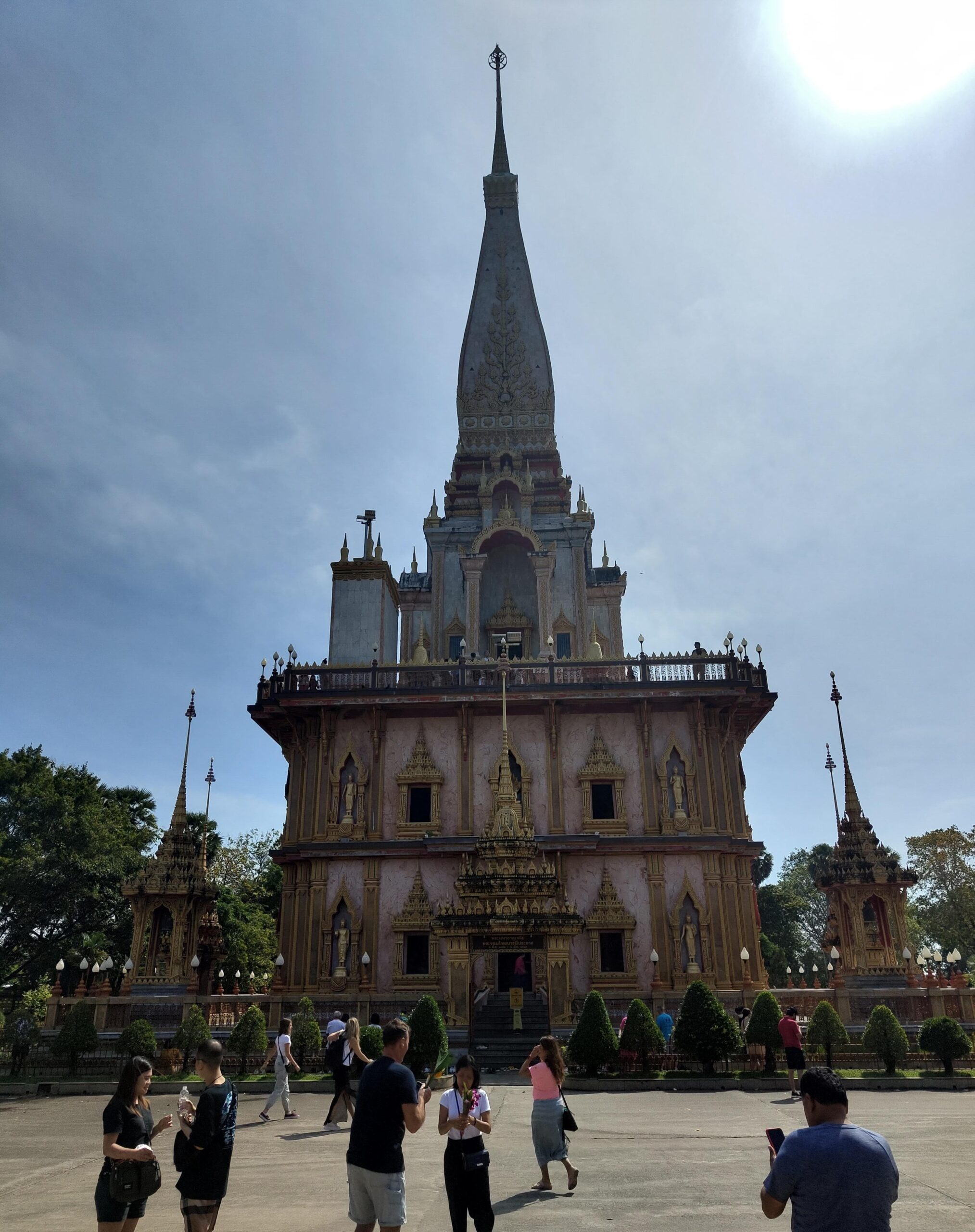
History and living function. Wat Chalong (formally Wat Chaiyathararam) earned its place in island memory in 1876, when its abbot, Luang Pho Chaem — a monk revered for healing and leadership — helped rally and treat locals during the tin-miner rebellion; his statue remains the temple’s devotional heart, continuously honored with gold leaf and garlands. The compound grew around that reverence: ornate halls with mirrored mosaics and naga staircases, and the Grand Pagoda — the 60-meter chedi said to enshrine a bone fragment relic of the Buddha — whose upper terraces add temple-roofline views over the palms.
What distinguishes it from prettier-but-emptier temples is traffic: Thai families making merit, incense in banks of hundreds, the fortune-stick rattle of siamsi, monks receiving devotees, and those firecracker volleys of thanks. You’re not observing heritage; you’re standing in it mid-use.
The Experience
Budget 60–90 minutes: the Grand Pagoda’s three levels (relic shrine at top, murals of the Buddha’s life en route), the old ubosot and the Luang Pho Chaem shrine hall — join the queue and press a square of gold leaf onto the statues if moved to — the courtyard’s wax figures of the revered abbots, and the kiln where firecracker bundles (purchasable on site) explode gratitude at intervals. Hours run roughly 7 am–5 pm daily for the main halls (grounds longer; verify current times), and entry is free with donation boxes throughout.
Dress code is standard and enforced: covered shoulders and knees, shoes off inside halls, hats off, and modest behavior around worshippers — photograph the architecture freely, people with permission.
Honest Caveats
Wat Chalong’s popularity is its friction: tour buses deliver waves from mid-morning through afternoon in high season, and the compound between 10 am and 3 pm can feel processed — go before 9 am for the temple at its devotional best, light angled low, courtyards quiet enough to hear the bells. The surrounding gauntlet of vendors and the occasional “helpful” guide with unofficial fees deserve polite firmness (official entry is free; guides are optional and negotiable). And burning-season haze or midday glare can flatten the pagoda’s sparkle — morning again wins.
Getting There and Pairing It
The temple stands on Chaofa West Road in Chalong, near the island’s center-south — 20 minutes from Kata/Karon and Phuket Town, 30–40 from Patong, with easy parking. It pairs into the definitive southern half-day: Wat Chalong early, Big Buddha’s summit next (ten minutes to the turn-off), then lunch at Chalong pier or onward to Rawai’s beaches. Modest dress for both sites makes the logistics trivial.
The Bottom Line
Wat Chalong is Phuket’s spiritual main street: free, magnificent, and — rarest of all for a top-ten attraction — completely authentic in its daily business. Come early, dress respectfully, climb the pagoda, and let a stranger’s firecrackers of gratitude startle you properly. Few island experiences are this genuine at any price, let alone none.
For more honest, on-the-ground guides to Phuket’s temples and traditions, keep exploring PhuketInside.