
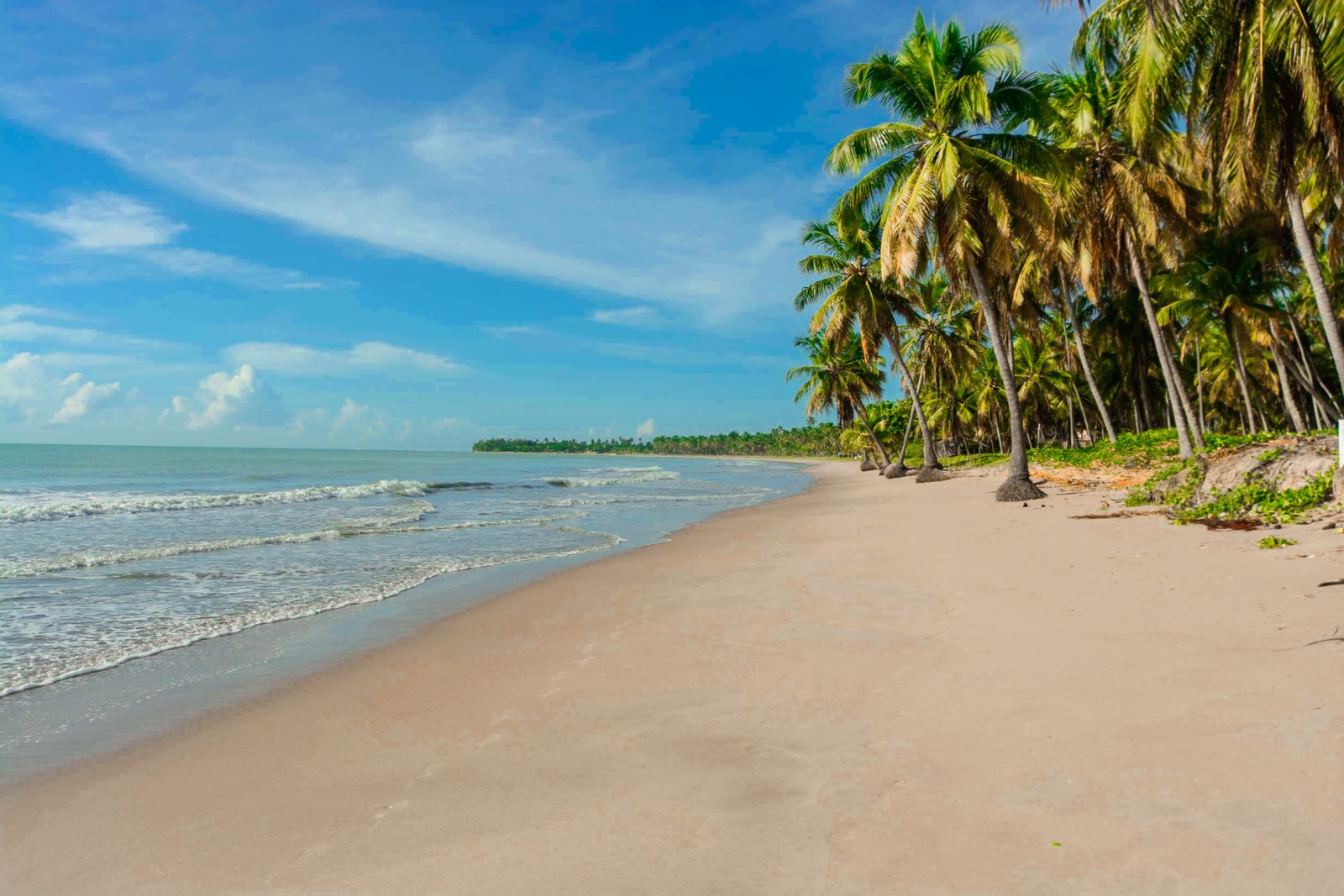
Stand on Mai Khao at golden hour and look south: the sand runs unbroken toward the horizon, eleven kilometers of it, the longest beach on Phuket — and depending on the day, you might count the other people on it without running out of fingers. Mai Khao is the island’s great contrarian choice. No beach chairs for rent, no banana boats, no beachfront bars every fifty meters. Just a vast, wild, wind-brushed shoreline inside Sirinat National Park, a string of discreet luxury resorts hidden behind the dune vegetation, and jets floating down over the famous plane-spotting corner at its southern tip. If your dream beach is measured in emptiness, this is Phuket’s best offer. It comes with conditions.
Why Mai Khao Earns Its Spot
Mai Khao is what raw coast looks like when national park protection, sea-turtle conservation, and sheer distance from the party zones combine. The beach stretches from near the airport all the way to Phuket’s northern tip by the Sarasin Bridge. Development is sparse and set back — a handful of well-known five-star resorts and villa properties spaced kilometers apart, each opening onto essentially private-feeling sand despite the beach being public its entire length.
This is also historically a sea-turtle nesting beach — conservation programs and occasional hatchling releases (typically in the cooler months) continue efforts to protect what development elsewhere destroyed. The turtle heritage explains the protective rules, and the protective rules explain the emptiness. It’s a virtuous circle you get to walk along.
The Beach Itself
The scale changes how you use it. Mai Khao is a walking, running, and contemplating beach par excellence — firm sand near the waterline, sea breeze, and a horizon that resets your sense of proportion. The sand is golden-brown and coarser than the southern beaches’ powder, the dune line behind is covered in hardy creepers and casuarinas, and facilities on the sand itself are nearly nonexistent by design: bring water, shade, and everything else you need, or rely on your resort.
Now the serious part: Mai Khao is not a casual swimming beach. The shore drops off steeply, the shore break dumps hard even on moderate days, and currents along this exposed stretch are strong year-round — in monsoon season (May–October), it’s flatly dangerous, and drownings have occurred here in every season. There are long stretches with no lifeguards and no one to hear you. Wade, cool off with your feet planted, swim only on genuinely calm high-season days close to resort-patrolled sections — and never alone.
The Plane-Spotting Corner
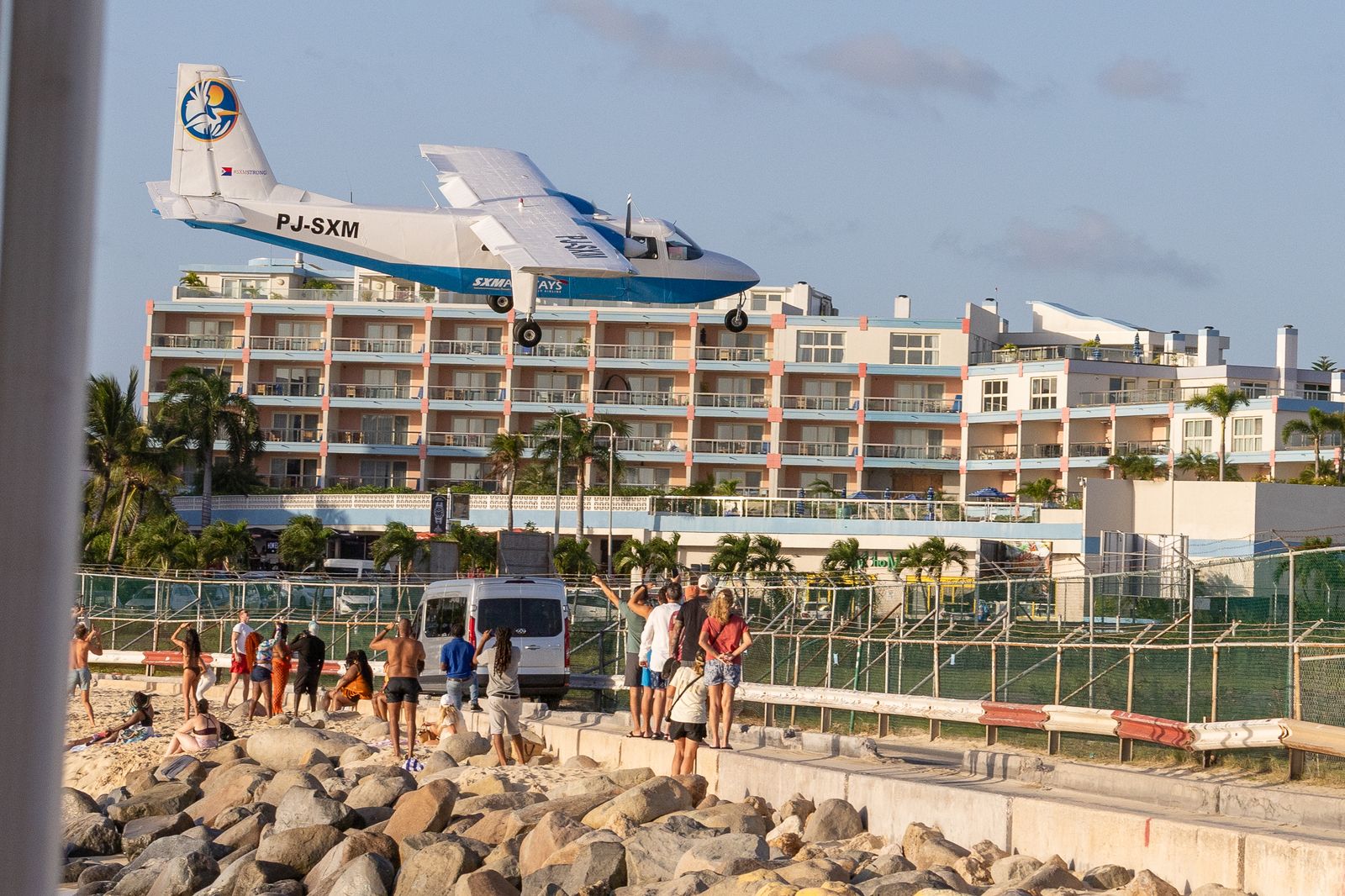
The southern end of Mai Khao, beside the airport fence, delivers one of Thailand’s most photographed spectacles: airliners passing what feels like touching distance overhead. The roar, the shadow, the spray of jet wash — it’s genuinely exhilarating, but this is not a spot you stumble into by accident. Cars can’t drive up to the viewing area — park near the Sirinat National Park checkpoint and walk roughly a kilometer north along the sand; it’s flat and easy but shadeless, so bring water and a hat. With up to around 30 flights an hour at busy times, you’re rarely waiting long once you’re in position.
Getting the actual spectacle right depends on timing the season, not just the day. From roughly December through May, prevailing winds mean aircraft land directly over the beach — the dramatic, low, close-up version most people picture. Outside that window, the wind pattern often flips and planes take off toward the west instead, which is a different, less theatrical view. If catching a low landing shot is the whole point of the trip, plan for high season; morning or late-afternoon light also beats the flat glare of midday for photos.
Beyond the Sand
The Mai Khao area rewards slow exploration: the turtle conservation center at one of the resorts, the splash-park family attractions near the JW Marriott corner, seafood restaurants around the old Mai Khao village lanes, and the Sarasin Bridge viewpoint at the island’s northern tip. Nai Yang’s casuarina-shaded restaurant row is 10–15 minutes south. But be honest with yourself: staying at Mai Khao means committing to your resort and the quiet. The nearest real town buzz is 30–45 minutes away, and taxi dependence adds up fast if you fight the isolation instead of embracing it.
Best Time to Visit
November through April is the only sensible window for any water contact, and even then with the caution above; these months also bring the best walking weather and the calmest look to the sea. Low season turns Mai Khao spectacular in a different register — thundering surf, empty kilometres, dramatic skies — strictly as theater, viewed from the sand. Resort prices here swing hard between seasons; shoulder-month deals (May, October–November) at the five-stars can be some of the best luxury value on the island.
Getting There
Mai Khao is the closest major beach to Phuket Airport — the southern access points are 10–15 minutes away (around 300–400 baht by taxi, less by app). From Patong or Kata, count on a full hour or more. Access roads run off the main 402 highway toward the various resorts and public entrances; the plane-spotting corner is reached via the lane toward the beach just south of the runway. A scooter works for exploring the flat local lanes, but distances here are real — this is car territory by Phuket standards.
Who Mai Khao Is For
Honeymooners who want the resort bubble, runners and walkers, plane-spotters, and anyone allergic to crowds. It is emphatically not for confident-swimmer bravado, nightlife needs, or travelers who want restaurants at strolling distance. Mai Khao offers the rarest thing on Phuket — genuine solitude on a grand scale — and asks only that you respect a sea that has earned its reputation. Bring a hat, bring water, and let eleven kilometers do their work.
For more honest, on-the-ground guides to Phuket’s wild north coast, keep exploring PhuketInside.