
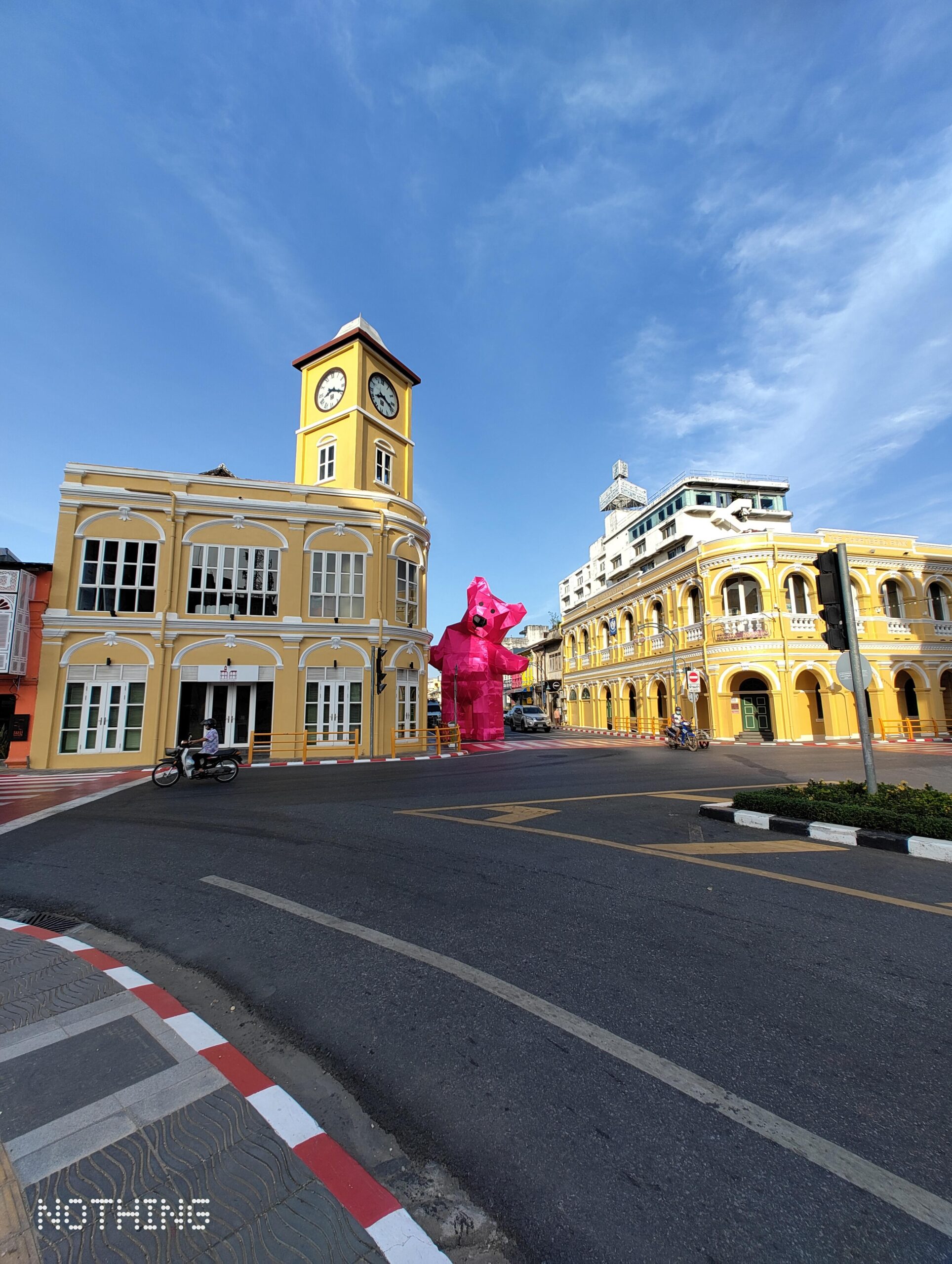
For decades, tourists treated Phuket Town as the place the airport taxi drove past. Then the shophouses got their colors back, and the secret reversed: today the Old Town’s grid — Thalang, Dibuk, Krabi, Yaowarat, Phang Nga roads and the pastel alley of Soi Romanee — ranks with the beaches as the island’s essential experience. This is the built legacy of the tin-mining boom: Sino-Portuguese shophouses and mansions raised by Chinese-Peranakan merchant families a century-plus ago, now housing cafes, galleries, noodle institutions, and shrines that still smoke with incense. It costs nothing, photographs like a film set, and eats better than anywhere on the island. Here’s the walking brief.
Why It Earns Its Spot
Authentic depth over reconstruction. The district isn’t a curated “heritage zone” invented for tourism — it’s the town’s actual historic core, where Baba families still live above shops their great-grandparents built with tin fortunes and Penang connections (the architecture’s arched colonnades, stucco ornament, and inner courtyards trace that Straits-Chinese lineage directly). The restoration wave painted the facades and filled the ground floors with third-wave coffee and boutiques, but the bones, shrines, and food canon remain original — a coexistence of hip and heritage that few Asian old towns balance this well.
The Walking Circuit
The core grid walks in two-to-three unhurried hours. Thalang Road is the spine — the densest run of restored facades, best photographed before 10 am light and crowds. Soi Romanee, the lantern-hung former pleasure alley connecting toward Dibuk, is the postcard shot. Dibuk and Krabi roads carry the grander mansions (including the Blue Elephant’s governor’s residence and the Peranakan museums in period buildings); Yaowarat and Phang Nga add shrine culture and the clock-tower corner. Punctuate with the district’s institutions: Roti Taew Nam for breakfast, Lock Tien for Hokkien lunch, a-pong crepes from the charcoal stalls, shophouse cafes for the heat retreat, and the Jui Tui and Put Jaw Chinese shrines — the Vegetarian Festival’s ritual heart — for the incense-and-oracle layer beneath the pastel.
Time it right and the district performs: Sunday evenings, Thalang Road closes for the Lard Yai walking-street market — the Old Town’s definitive event — and early October’s Vegetarian Festival turns the whole quarter into southern Thailand’s most intense spectacle of processions and firecrackers.
Honest Caveats
Manage three expectations. First, scale: this is a compact grid, not a sprawling ancient city — visitors expecting Hoi An’s expanse will finish the core streets quickly (the food and cafe culture is what expands hours into a day). Second, gentrification’s edge: rents have pushed some old trades out in favor of interchangeable souvenir boutiques, and weekend selfie-crowds can crowd the famous corners — weekday mornings restore the balance. Third, heat: midday between the shophouses is brutal; structure the visit as morning walk, long lunch, cafe siesta, evening reprise. Cars fare badly on the narrow one-ways — park at the district’s edge or arrive by taxi.
Getting There and Pairing It
The Old Town sits in central Phuket Town — 35–50 minutes from the west-coast beaches, 30–40 from the airport, and honestly worth an overnight: boutique hotels in converted shophouses let you own the streets at dawn and after the day-trippers retreat. Pair naturally with Khao Rang Hill’s viewpoint above town, Central Phuket’s air-conditioning nearby, and the Sunday market as the anchor event.
The Bottom Line
Old Phuket Town is the island’s soul made visible: tin-boom architecture, Baba kitchens, working shrines, and the best food-per-footstep ratio in southern Thailand, all free to walk. Give it a morning at minimum and a Sunday if you can — arrive before the light gets high, eat everything historic, and let the beach wait a day. It’s the Phuket that existed before tourism, still open for business.
For more honest, on-the-ground guides to the Old Town’s streets, tables, and festivals, keep exploring PhuketInside.